United States

AI Compliance in United States

The United States regulates AI through a patchwork of federal guidance, agency enforcement, and state-level legislation. Organizations operating nationally must track the NIST AI RMF, FTC enforcement, federal anti-discrimination law, a growing number of state laws, and federal efforts under EO 14365 to challenge some of those state laws. A centralized compliance approach is essential to avoid gaps across jurisdictions.

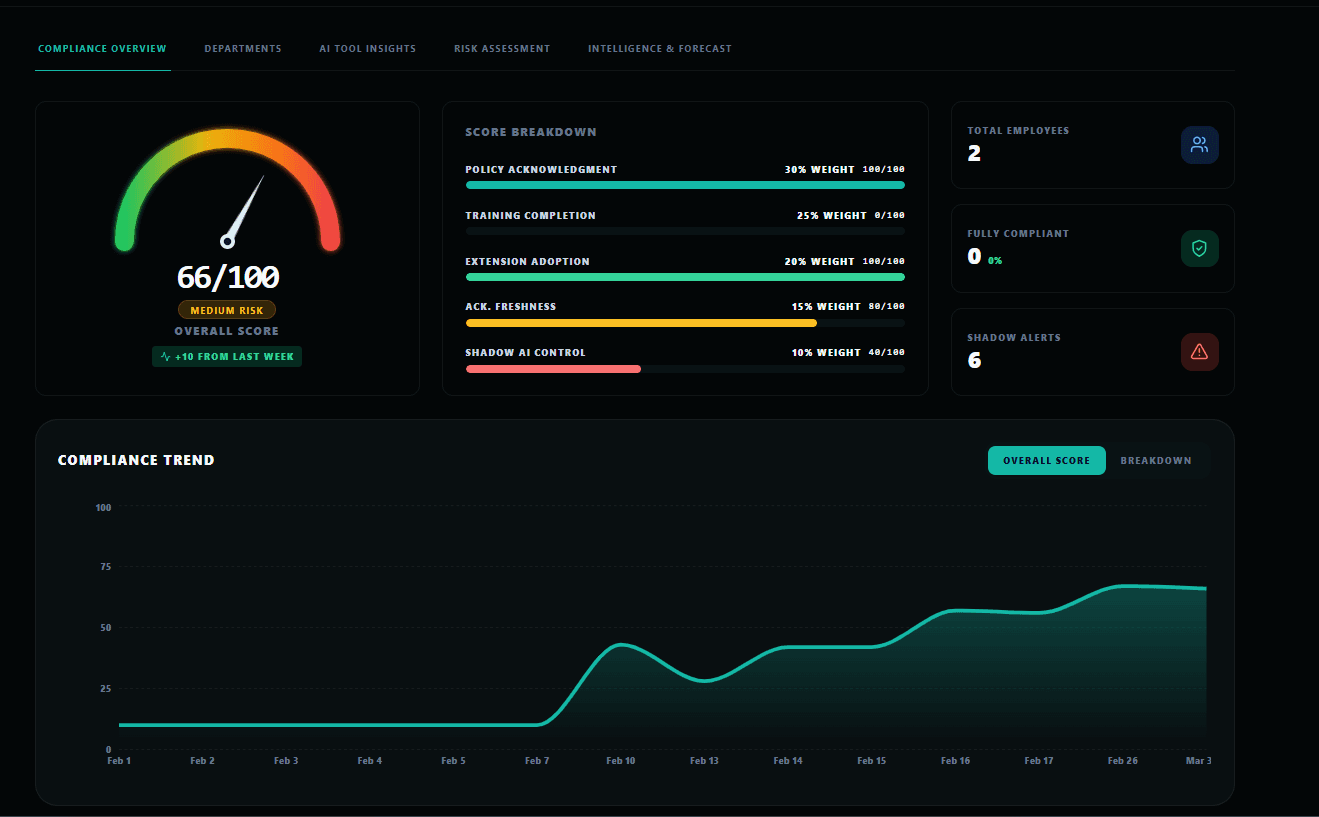
PolicyGuard compliance overview with overall score, score breakdown and compliance trend

AI Regulations

RegulationWhat It CoversEffective DateApplies To
NIST AI Risk Management Framework
Voluntary federal framework for AI risk governance across all sectorsJanuary 2023All organizations developing or deploying AI systems in the U.S.
Federal AI Executive Orders 14179 and 14365
Current federal AI policy (EO 14110 was revoked January 20, 2025); EO 14365 directs a DOJ task force to challenge state AI laws seen as inconsistent with national policyJanuary 2025 / December 2025Federal agencies; indirectly, organizations subject to state AI laws
FTC Section 5 AI Enforcement
Consumer protection enforcement against deceptive or unfair AI practicesOngoing enforcementAny company using AI in consumer-facing products or marketing
Title VII and ADA (AI in employment)
Federal anti-discrimination law applies to AI hiring tools; EEOC withdrew its 2022-2023 AI technical assistance in January 2025, but the underlying law is unchangedOngoingEmployers using AI tools in hiring, promotion, or termination processes
OMB M-25-21 and M-25-22 (federal AI use and acquisition)
Federal agency AI governance, high-impact AI risk practices, and AI procurement terms (replaced M-24-10 and M-24-18)April 2025All federal agencies using AI in government operations

Compliance Steps

  1. 1Map all AI systems to applicable federal and state regulatory requirements
  2. 2Implement NIST AI RMF controls as a baseline governance framework
  3. 3Conduct bias audits for AI tools used in employment and consumer decisions
  4. 4Establish cross-state compliance tracking for California, Colorado, Illinois, and other state AI laws
  5. 5Document AI system inventories and risk assessments for regulatory reporting readiness

Key Deadlines

Date
January 2027
Requirement

Colorado SB 26-189 ADMT notice and adverse outcome obligations (replaced the Colorado AI Act); California CPPA ADMT requirements

Who Must Act

Businesses using automated decision-making technology for consequential decisions in Colorado or California


Date
Ongoing
Requirement

FTC enforcement actions for deceptive AI practices

Who Must Act

All companies using AI in consumer products

Date
Ongoing
Requirement

NYC Local Law 144 annual bias audits for automated employment decision tools

Who Must Act

Employers using AI hiring tools for NYC candidates

PolicyGuard maps your AI systems to federal and state requirements simultaneously and alerts you when new regulations take effect. Stay ahead of the U.S. regulatory patchwork.

Ready to govern every AI tool your team uses?

One platform to enforce policies, track compliance, and prove governance across 80+ AI tools.

30-minute personalized walkthrough. Live in 48 hours. No long-term contracts.