AI regulatory compliance in 2026 requires organizations to meet requirements from multiple overlapping frameworks including the EU AI Act, US state laws, sector-specific regulations, and international standards.
Key regulations include the EU AI Act, Colorado AI Act, California AI transparency laws, Illinois BIPA, HIPAA for healthcare AI, and ECOA/Title VII for employment AI. Most organizations need a cross-jurisdictional compliance program that maps common controls across frameworks.
The AI Regulatory Landscape in 2026
The regulatory environment for AI has transformed dramatically. What was a patchwork of guidelines and voluntary frameworks has become a complex web of binding regulations across jurisdictions and sectors. For organizations using AI, understanding and complying with these regulations is no longer optional.
This comprehensive guide covers every major AI regulation you need to know in 2026, helping you build a unified compliance framework that addresses overlapping requirements efficiently.
Global Regulations
EU AI Act
The EU AI Act remains the most comprehensive AI regulation globally. Its risk-based classification system categorizes AI applications as prohibited, high-risk, limited-risk, or minimal-risk, with obligations increasing with risk level. Key enforcement milestones continue through 2026, with high-risk system requirements fully in force.
The Act's extraterritorial scope means it applies to any organization whose AI systems affect people in the EU, regardless of where the organization is headquartered. Fines reach up to 35 million euros or seven percent of global turnover.
NIST AI Risk Management Framework
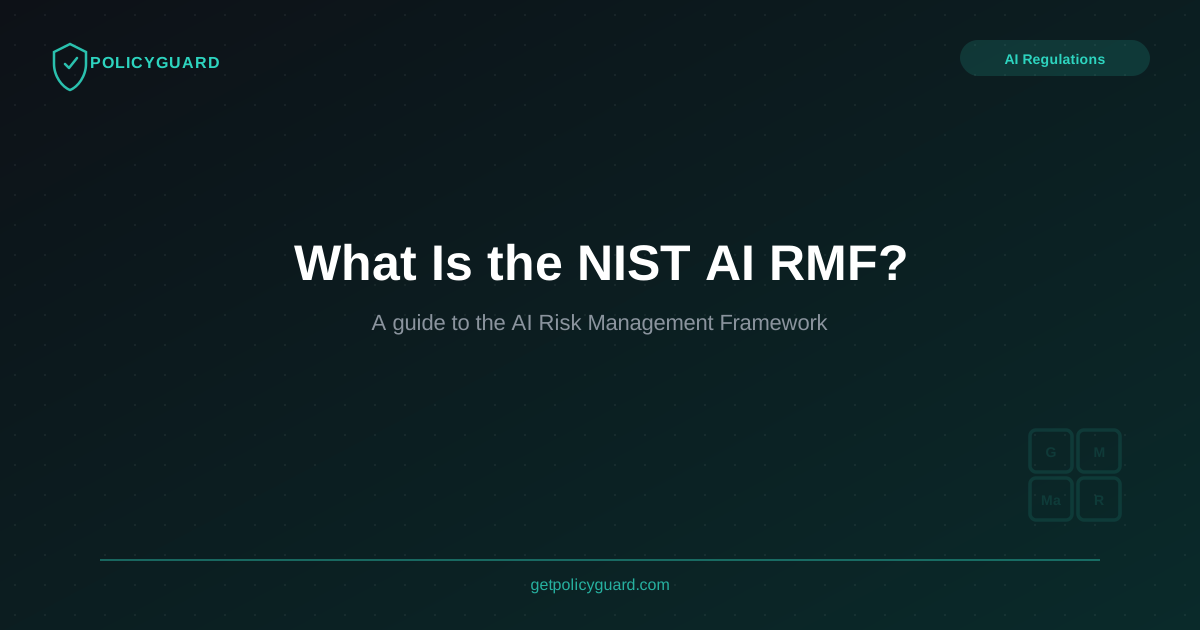
The NIST AI RMF provides a voluntary but widely adopted framework for AI risk management in the United States. Its four functions, Govern, Map, Measure, and Manage, provide a structured approach that many organizations use as their primary AI risk management methodology. Federal agencies and contractors face increasing pressure to adopt the framework formally.
ISO 42001
ISO 42001 has become the recognized international standard for AI management systems. Certification demonstrates responsible AI management to customers, partners, and regulators. The standard is increasingly referenced in procurement requirements and regulatory frameworks as an acceptable compliance mechanism.
US State-Level AI Laws
Several US states have enacted or are implementing AI-specific legislation. Colorado's AI Act requires disclosure and impact assessments for high-risk AI in consumer interactions. California has introduced transparency requirements for AI-generated content and employment decisions. Illinois BIPA continues to govern biometric data used in AI systems. Additional states have employment-specific AI requirements covering automated hiring tools.
The patchwork of state laws creates complexity for organizations operating nationwide. Building a compliance framework based on the strictest requirements ensures broad coverage.
PolicyGuard helps companies like yours get AI governance documentation audit-ready in 48 hours or less.
Start free trial →Sector-Specific Requirements
Financial Services
Financial regulators have issued guidance on AI model risk management, algorithmic trading oversight, and automated lending decisions. Bank regulators expect adherence to SR 11-7 model risk management guidance applied to AI models, with additional requirements for explainability in consumer-facing decisions.
Healthcare
AI in healthcare faces FDA oversight for clinical decision support tools and diagnostic systems. HIPAA requirements extend to AI tools that process protected health information. Additional requirements apply to AI used in drug development and clinical trials.
Employment
AI used in hiring, promotion, and termination decisions faces increasing scrutiny. New York City's Local Law 144 requires bias audits of automated employment decision tools. Similar requirements are spreading to other jurisdictions, with focus on adverse impact testing and candidate notification.
Building a Unified Compliance Strategy
1. Regulatory Mapping
Identify all regulations that apply to your organization based on geography, industry, and AI use cases. Create a matrix that maps regulations to your AI systems, highlighting overlapping requirements that can be addressed by common controls.
2. Common Control Framework
Many AI regulations share common themes: risk assessment, transparency, human oversight, documentation, and accountability. Build controls that satisfy the most stringent version of each common requirement, providing coverage across multiple regulations simultaneously.
3. Policy Foundation
Your AI governance policies should reference specific regulatory requirements. Use PolicyGuard templates that map to multiple frameworks, reducing duplication and ensuring completeness.
4. Continuous Monitoring
Regulations continue to evolve. Assign responsibility for monitoring regulatory developments and assessing their impact on your compliance program. Use your governance toolkit to track changes and update your framework accordingly.
How PolicyGuard Helps
PolicyGuard tracks your compliance posture across multiple frameworks simultaneously. Our platform maps your policies and controls to specific regulatory requirements, identifies gaps, and provides audit-ready evidence. Start your free trial to assess your multi-regulation compliance status.
Frequently Asked Questions
How do we keep up with changing AI regulations?
Assign a regulatory monitoring function within your governance team. Subscribe to regulatory updates from relevant bodies, join industry groups that track regulatory developments, and use tools like PolicyGuard that update compliance mappings as regulations change.
Do we need separate compliance programs for each regulation?
No. A unified compliance framework with common controls is more efficient and effective. Map common requirements across regulations and build controls that satisfy the strictest version. Add regulation-specific controls only where unique requirements exist.
Which regulation should we prioritize?
Prioritize based on enforcement risk and business impact. The EU AI Act typically takes priority due to its broad scope and significant penalties. Then address sector-specific requirements and state-level laws based on your operational footprint.
How do voluntary frameworks like NIST AI RMF relate to mandatory regulations?
Voluntary frameworks often become the standard of care that regulators use to evaluate compliance. Adopting the NIST AI RMF demonstrates responsible AI management even where it is not legally required, and it provides a strong foundation for meeting mandatory requirements under other regulations.
What happens if regulations conflict?
In practice, major AI regulations align more than they conflict. Where differences exist, the strictest requirement typically provides compliance with less stringent ones. Genuine conflicts between jurisdictions are rare, but if they arise, seek legal counsel to determine the appropriate approach for your specific situation.