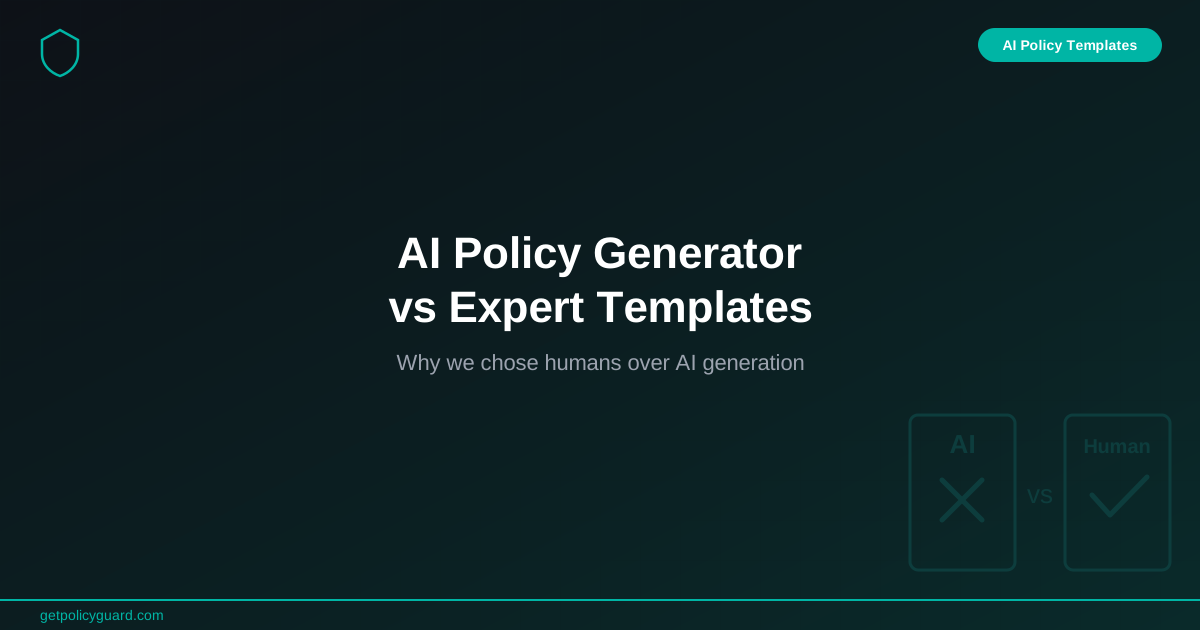
AI policy generators use AI to produce policy documents, which creates a fundamental problem: using AI to govern AI produces generic output with no legal grounding.
Expert-curated templates written by compliance and legal professionals are more defensible, more accurate, and more likely to satisfy auditors and regulators. Generated policies consistently miss regulatory nuance, enforcement mechanisms, and jurisdiction-specific requirements.
The Rise of AI Policy Generators
As demand for AI governance policies has grown, so have tools that promise to generate policies automatically using AI. The appeal is obvious: answer a few questions, click a button, and receive a complete AI policy document. But is the output actually good enough to stake your compliance on?
At PolicyGuard, we evaluated both approaches extensively before choosing expert-curated templates over AI generation. This article explains our reasoning and helps you make an informed decision for your organization.
How AI Policy Generators Work
Most AI policy generators use large language models to produce policy documents based on user inputs. You typically provide your company name, industry, size, and select the types of AI tools you use. The generator then produces a policy document that looks professional and reads well.
The problem is not in how they look. It is in what they miss.
The Case for Expert-Curated Templates
Regulatory Accuracy
AI-generated policies often reference regulations incorrectly or incompletely. The EU AI Act, NIST AI RMF, and ISO 42001 have specific requirements that require precise language. A governance professional who has read and interpreted these regulations writes materially different policy language than an LLM summarizing them. The difference matters when an auditor reviews your documentation.
Industry Context
Healthcare organizations have different AI governance requirements than financial services firms. A generated policy may include generic language about data handling, but an expert-curated template for healthcare will specifically address HIPAA implications, clinical decision support systems, and FDA requirements for AI in medical devices. This level of specificity cannot be reliably generated.
Practical Enforceability
Expert-curated templates are written with enforcement in mind. They include specific, measurable requirements that can be tracked and audited. AI-generated policies tend toward vague aspirational language like "employees should exercise caution" rather than actionable requirements like "employees must not enter data classified as Confidential or above into any AI tool not on the approved list."
Legal Review
PolicyGuard templates have been reviewed by legal professionals who understand employment law, data protection regulations, and contractual requirements. This review catches issues like unenforceable clauses, missing liability language, and conflicts with existing employment agreements that AI generators consistently miss.
PolicyGuard helps companies like yours get AI governance documentation audit-ready in 48 hours or less.
Start free trial →When AI Generation Falls Short
We tested several AI policy generators against our expert-curated templates and found consistent gaps in the generated output. Common issues include missing data classification requirements, incomplete incident response procedures, vague enforcement language that would not withstand legal scrutiny, and incorrect regulatory references.
The PolicyGuard Approach
Our template library is developed by governance professionals with real-world experience implementing AI policies at enterprises. Each template is:
- Written by subject matter experts in AI governance and compliance
- Reviewed by legal professionals for enforceability
- Mapped to specific regulatory requirements
- Updated regularly as regulations evolve
- Customizable to your organization's specific needs
Start your free trial to access our complete template library and see the difference expert curation makes.
Frequently Asked Questions
Are AI-generated policies ever appropriate?
AI-generated policies can serve as a rough starting point for internal brainstorming, but they should never be used as-is for compliance purposes. If you use AI to draft initial policy language, have it thoroughly reviewed by governance and legal professionals before deployment.
How do expert-curated templates stay current?
PolicyGuard's governance team monitors regulatory developments continuously. When a regulation changes or a new one is introduced, we update our templates and notify customers. This ongoing maintenance is a key advantage over one-time generated documents.
Can I customize expert-curated templates?
Absolutely. Templates are designed as starting points that you tailor to your organization. The structure, regulatory references, and core requirements are expert-validated, while the specific tool lists, department names, and internal processes are customized by you.
How long does it take to implement a template?
Most organizations can customize and deploy a PolicyGuard template within one to two weeks. This includes internal review, customization, and initial distribution. Compare this with the weeks of review and revision typically needed when starting from an AI-generated draft.
What about cost differences?
Some AI generators offer free or low-cost policy generation. However, the hidden cost is in the review, revision, and risk that comes with inadequate policies. A compliance fine far exceeds the cost of proper templates. PolicyGuard offers affordable plans that include the full template library, ongoing updates, and policy management tools.