Shadow AI refers to AI tools used by employees without organizational knowledge or approval.
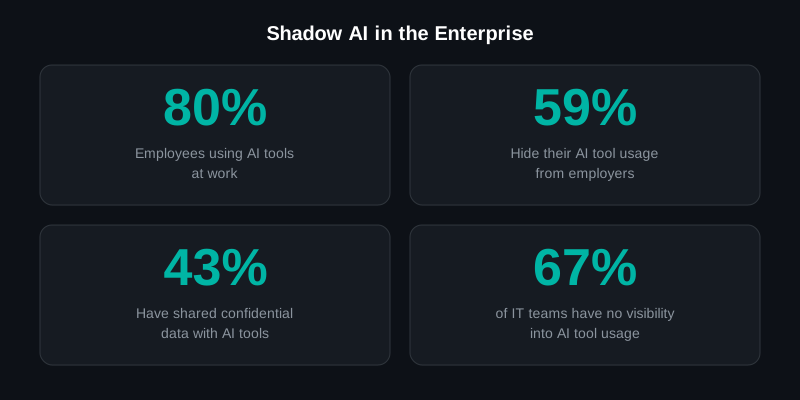
Studies show 80 percent of employees use AI tools at work, and 59 percent hide their usage from employers. Shadow AI creates data leakage, compliance, and liability risks that traditional security tools cannot detect. Organizations need dedicated AI monitoring to identify and govern unsanctioned AI tool usage.
What Is Shadow AI?
Shadow AI refers to the use of artificial intelligence tools and services by employees without the knowledge, approval, or oversight of IT and governance teams. It is the AI equivalent of shadow IT, and it is far more pervasive than most organizations realize.
Research consistently shows that the majority of enterprise AI usage happens outside formal governance channels. Employees sign up for free AI tools, paste company data into chatbots, use AI-powered browser extensions, and build workflows with AI services that IT has never evaluated. Each of these creates risk.
Why Shadow AI Is Dangerous
Data Exposure
When employees paste confidential information into consumer AI tools, that data may be stored, used for model training, or exposed through security vulnerabilities. Customer data, proprietary code, financial information, and strategic plans have all been leaked through shadow AI use. Unlike sanctioned enterprise tools with data processing agreements, consumer AI tools provide no contractual protections.
Compliance Violations
Shadow AI use can violate data protection regulations like GDPR, HIPAA, and the EU AI Act. If customer data is processed by an AI tool without proper consent, data processing agreements, or security controls, your organization may face regulatory penalties. The fact that usage was unauthorized does not shield the organization from liability.
Quality and Reliability Risks
AI tools used without governance may produce inaccurate, biased, or inappropriate outputs that employees use in customer-facing work, decision-making, or official communications. Without quality controls and review processes, these outputs can damage customer relationships, lead to poor decisions, and create legal liability.
Intellectual Property Risks
Inputting proprietary information into AI tools may compromise trade secret protections. AI-generated outputs may also raise IP ownership questions. Without clear policies, your organization may unknowingly compromise its intellectual property.
How to Detect Shadow AI
Network Monitoring
Monitor network traffic for connections to known AI service domains. While this does not catch everything, especially mobile usage, it provides a baseline understanding of which AI tools are being accessed from your corporate network.
Browser Extension Monitoring
Deploy monitoring tools that detect AI-related browser extensions. Many employees install AI assistants, writing tools, and code generators as browser extensions that bypass traditional network monitoring.
OAuth and SSO Audit
Review OAuth connections and third-party app authorizations across your cloud services. AI tools often request access to email, calendar, and document repositories through OAuth flows that may not be visible to IT.
Employee Surveys
Anonymous surveys can reveal AI usage that technical monitoring misses. Ask employees what AI tools they use, how they use them, and what data they share. Frame the survey as informational rather than punitive to encourage honest responses.
Expense Report Analysis
Review expense reports and corporate credit card statements for AI tool subscriptions. Many employees subscribe to premium AI tools and expense them, creating a financial trail of shadow AI adoption.
PolicyGuard helps companies like yours get AI governance documentation audit-ready in 48 hours or less.
Start free trial →Governance Strategies
Enable Rather Than Block
Attempting to block all AI usage is counterproductive. Employees use AI because it makes them more productive, and blocking it drives usage underground where it is harder to monitor. Instead, provide approved alternatives that meet both productivity and security requirements.
Establish Clear Policies
Create and communicate clear AI policies for employees that explain what is approved, what is prohibited, and why. Use your acceptable use policy as the foundation and ensure every employee acknowledges and understands it.
Build an AI Tool Registry
Create a formal registry of all AI tools in use, both sanctioned and discovered through detection efforts. For each tool, document the risk profile, data handling practices, and governance status. This registry becomes the basis for your governance toolkit.
Implement Monitoring
Deploy continuous monitoring that provides visibility into AI tool usage across the organization. PolicyGuard provides agent-based monitoring and browser extension detection that helps governance teams maintain awareness of AI usage patterns and respond to shadow AI proactively.
Getting Started
Start by understanding your current shadow AI exposure. PolicyGuard's discovery tools can help you identify AI tools in use across your organization and assess the associated risks. Start your free trial to get visibility into your AI landscape.
Frequently Asked Questions
How common is shadow AI?
Studies consistently show that a large majority of AI usage in enterprises occurs without formal IT approval. The exact percentage varies by industry and company culture, but it is safe to assume that shadow AI exists in any organization where employees have internet access.
Can we completely eliminate shadow AI?
No. The goal is to minimize it and manage the risk it creates. Some level of unapproved AI usage will always exist. Focus on reducing high-risk shadow AI, especially cases involving sensitive data, while making approved tools easily accessible.
Should we punish employees for using shadow AI?
Generally, no, especially during the discovery phase. Punitive approaches drive shadow AI further underground. Instead, use discovery as an opportunity to understand employee needs, provide approved alternatives, and educate about risks. Reserve disciplinary measures for deliberate violations after policies and training are in place.
How often should we scan for shadow AI?
Continuous monitoring is ideal. At minimum, conduct quarterly shadow AI assessments that combine technical scanning with employee surveys. The AI tool landscape changes rapidly, and new shadow AI can appear at any time.
What should we do when we discover shadow AI?
First, assess the risk of the discovered tool. If it handles sensitive data, prioritize remediation. Then decide whether to sanction the tool with proper controls, provide an approved alternative, or prohibit its use. Communicate any changes clearly to affected employees.