
An AI acceptable use policy defines which AI tools employees may use, under what conditions, and what data they may process with those tools.
Every company using AI tools needs one. A complete policy covers approved tools, prohibited uses, data classification rules, enforcement mechanisms, and acknowledgment requirements. Without a formal acceptable use policy, organizations cannot demonstrate governance to auditors or regulators.
Why Your Company Needs an AI Acceptable Use Policy
An AI acceptable use policy is the foundational document that defines how employees can and cannot use AI tools in the workplace. Without one, you are exposed to data leaks, compliance violations, and inconsistent AI usage that can create significant business risk.
In 2026, with AI tools embedded in everything from email to code editors, an acceptable use policy is not optional. It is a baseline requirement for any organization that wants to use AI responsibly. This guide walks you through every section you need and provides a framework for implementation.
Key Components of an AI Acceptable Use Policy
1. Purpose and Scope
Start by clearly stating why the policy exists and who it applies to. The purpose should reference your commitment to responsible AI use, regulatory compliance, and protecting company data. The scope should cover all employees, contractors, and third parties who access company systems.
Be explicit that the policy covers all AI tools, including general-purpose tools like ChatGPT, specialized tools like GitHub Copilot, and AI features embedded in existing software like Microsoft 365 Copilot.
2. Approved AI Tools
Maintain a list of approved AI tools and their authorized use cases. For each tool, specify:
- The tool name and version
- Approved use cases and departments
- Data classification levels allowed (public, internal, confidential)
- Required configuration settings (enterprise accounts, data retention settings)
- The approval process for requesting new tools
This section should be treated as a living document that is updated as new tools are evaluated and approved. Tools not on the approved list should be considered prohibited by default, which helps address shadow AI risk.
3. Prohibited Uses
Clearly define what employees must never do with AI tools. Common prohibitions include:
- Entering personally identifiable information (PII) or protected health information (PHI)
- Uploading confidential business data, trade secrets, or proprietary code
- Using AI outputs for legal, medical, or financial decisions without human review
- Generating content that misrepresents AI-generated material as human-created
- Using AI tools to circumvent security controls or access restrictions
- Creating deepfakes or manipulative content
4. Data Handling Requirements
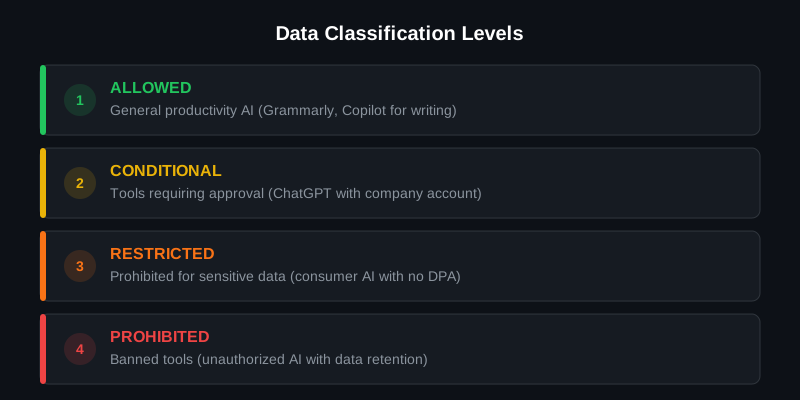
Data handling is often the highest-risk area of AI use. Your policy should specify exactly what data can be shared with AI tools based on your data classification system. Most organizations adopt a tiered approach:
- Public data: Can be used freely with approved AI tools
- Internal data: Can be used with approved enterprise AI tools that have appropriate data processing agreements
- Confidential data: Requires additional approval and may only be used with on-premise or VPC-deployed AI systems
- Restricted data: Cannot be used with any AI tool
5. Output Review and Accountability
Employees must understand that they are responsible for any AI output they use in their work. Require human review of all AI-generated content before it is shared externally or used in decision-making. Establish review standards for different use cases, from email drafts to code to analytical reports.
6. Intellectual Property and Attribution
Address IP ownership of AI-generated content. Clarify whether AI outputs created using company resources belong to the company. Establish guidelines for when and how to disclose AI assistance, both internally and to clients or partners.
7. Compliance and Regulatory Requirements
Reference the specific regulations that apply to your organization, such as the EU AI Act, GDPR, HIPAA, or industry-specific requirements. Explain how the acceptable use policy helps maintain compliance and what the consequences are for violations.
Implementing Your Policy
Communication and Training
A policy is only effective if employees understand it. Roll out the policy with mandatory training sessions that include practical examples of acceptable and unacceptable AI use. Create a comprehensive employee guide that translates policy requirements into daily workflows.
Enforcement and Monitoring
Define how violations will be detected and handled. Implement technical controls where possible, such as DLP tools that prevent sensitive data from being pasted into AI tools. Establish an audit trail to track AI usage patterns and identify potential policy violations.
Regular Review and Updates
AI tools and regulations change rapidly. Schedule quarterly reviews of your acceptable use policy to ensure it remains current. Assign ownership of the review process and establish criteria for when an ad-hoc update is needed, such as a new tool adoption or regulatory change.
PolicyGuard helps companies like yours get AI governance documentation audit-ready in 48 hours or less.
Start free trial →Using PolicyGuard Templates
PolicyGuard offers expert-curated AI policy templates that have been reviewed by governance professionals and legal experts. Unlike AI-generated policies, our templates reflect real-world regulatory requirements and best practices. Start your free trial to access our full template library.
Frequently Asked Questions
How often should we update the AI acceptable use policy?
Review the policy at least quarterly and whenever there is a significant change in AI tool usage, regulatory requirements, or organizational risk profile. Major incidents should also trigger an immediate review.
Should the policy cover personal AI use on company devices?
Yes. If employees can access AI tools from company devices or networks, the policy should address personal use. Many organizations prohibit personal AI use on company devices or require that personal use follow the same data handling rules as business use.
How do we handle employees who violate the policy?
Define a progressive discipline approach in the policy itself. First violations typically result in additional training, while repeated or serious violations may lead to formal warnings or other consequences. The key is consistency and documentation.
What if an employee needs to use a tool not on the approved list?
Include a request process in the policy. Employees should be able to submit a request to the IT or governance team for evaluation. Define the evaluation criteria and expected turnaround time to avoid frustration and shadow AI adoption.
Do we need different policies for different departments?
A single company-wide policy is recommended, with department-specific addendums for unique requirements. For example, engineering teams may have additional guidelines for AI-assisted code generation, while marketing teams may have specific rules for AI-generated content.
How do we handle AI tools embedded in existing software?
Treat AI features in existing software (like Microsoft Copilot or Google Duet AI) the same as standalone AI tools. The policy should cover all AI functionality regardless of how it is delivered. Evaluate embedded AI features as part of your software procurement process.